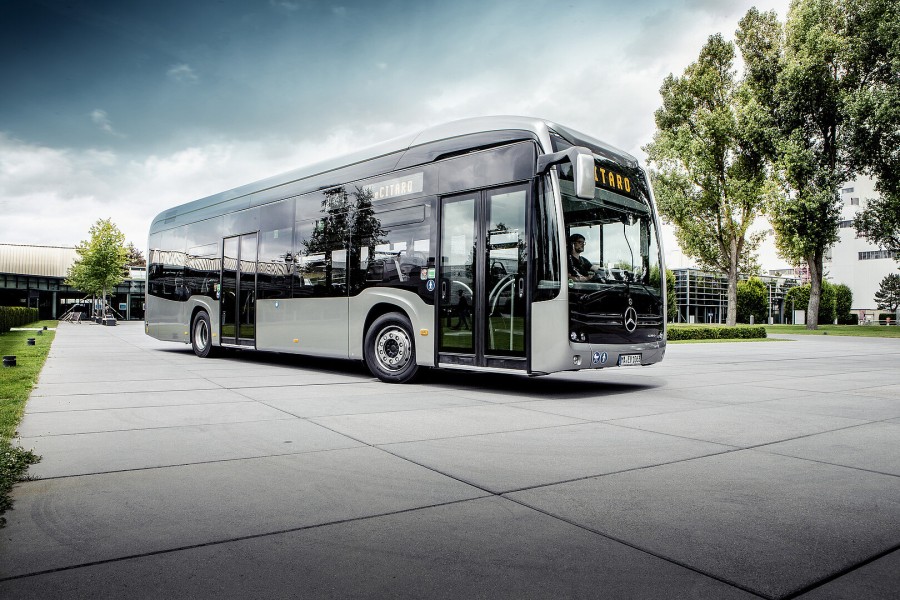
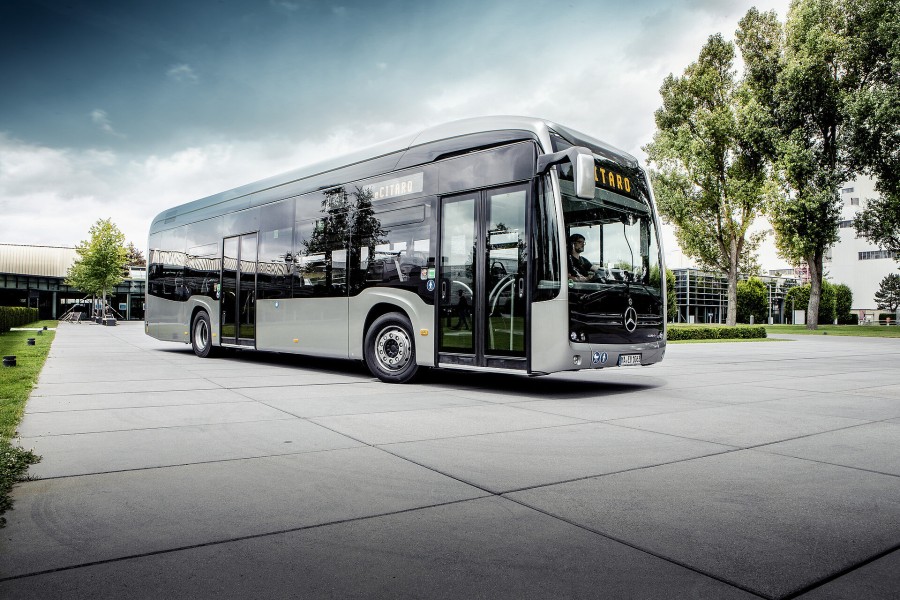
From mid-2025, the first electric buses will be operating in Kaiserslautern. Sixteen battery-powered buses will be funded under the third call for proposals for bus funding. The fleet decarbonisation project is being funded by the Federal Ministry of Digital and Transport (BMDV) with a total of 3.2 million euros under the ‘Guideline on the Promotion of Alternative Drive Systems for Buses in Passenger Transport’.
According to the Federal Ministry, funding for this measure is also being provided as part of the German Recovery and Resilience Plan (DARP) via the European Recovery and Resilience Facility (ARF) under the NextGenerationEU programme. The funding guideline is coordinated by NOW GmbH and implemented by Projektträger Jülich (PtJ).
With the help of this funding, the transport authority is pressing ahead with the expansion of its zero-emission bus fleet. This forms part of a comprehensive strategy to support the transition to environmentally friendly mobility and reduce CO₂ emissions.
In an EU-wide tender process, Daimler Buses GmbH prevailed against strong competition. The vehicles impressed with their innovative technology and cost-effectiveness. SWK intends to gradually introduce the new electric buses into regular service from the second half of 2025. With these new acquisitions, Kaiserslautern is taking a major step towards sustainable local transport and making an active contribution to climate protection. The buses are a key part of the efforts to make transport in Kaiserslautern more sustainable and cleaner. Thanks to state-of-the-art technology and high energy efficiency, they will make transport in Kaiserslautern more sustainable.
“By introducing these 16 battery-electric buses, SWK is not only setting an example for sustainable mobility but also underlining its innovative strength,” said Boris Flesch, divisional manager at SWK Verkehrs-AG. The funding under the “Guideline on the Promotion of Alternative Drive Systems for Buses in Passenger Transport” helps to drive forward the mobility transition in Kaiserslautern – including in public transport.
The new e-buses offer not only environmental benefits but also greater comfort for passengers. Thanks to their quiet operation and modern features, the travel experience in city traffic is significantly improved.
The purchase of these battery-electric buses is part of a long-term mobility strategy. SWK plans to further increase the proportion of electric vehicles and to transform its fleet sustainably over the coming years.
“Our aim is to make a tangible contribution to reducing pollution in the region. The new electric buses are an important step in this direction,” emphasises Dr Arvid Blume, Managing Director of SWK Stadtwerke Kaiserslautern.
SWK is delighted to have secured Daimler Buses, a highly competent local partner, for this crucial implementation phase.