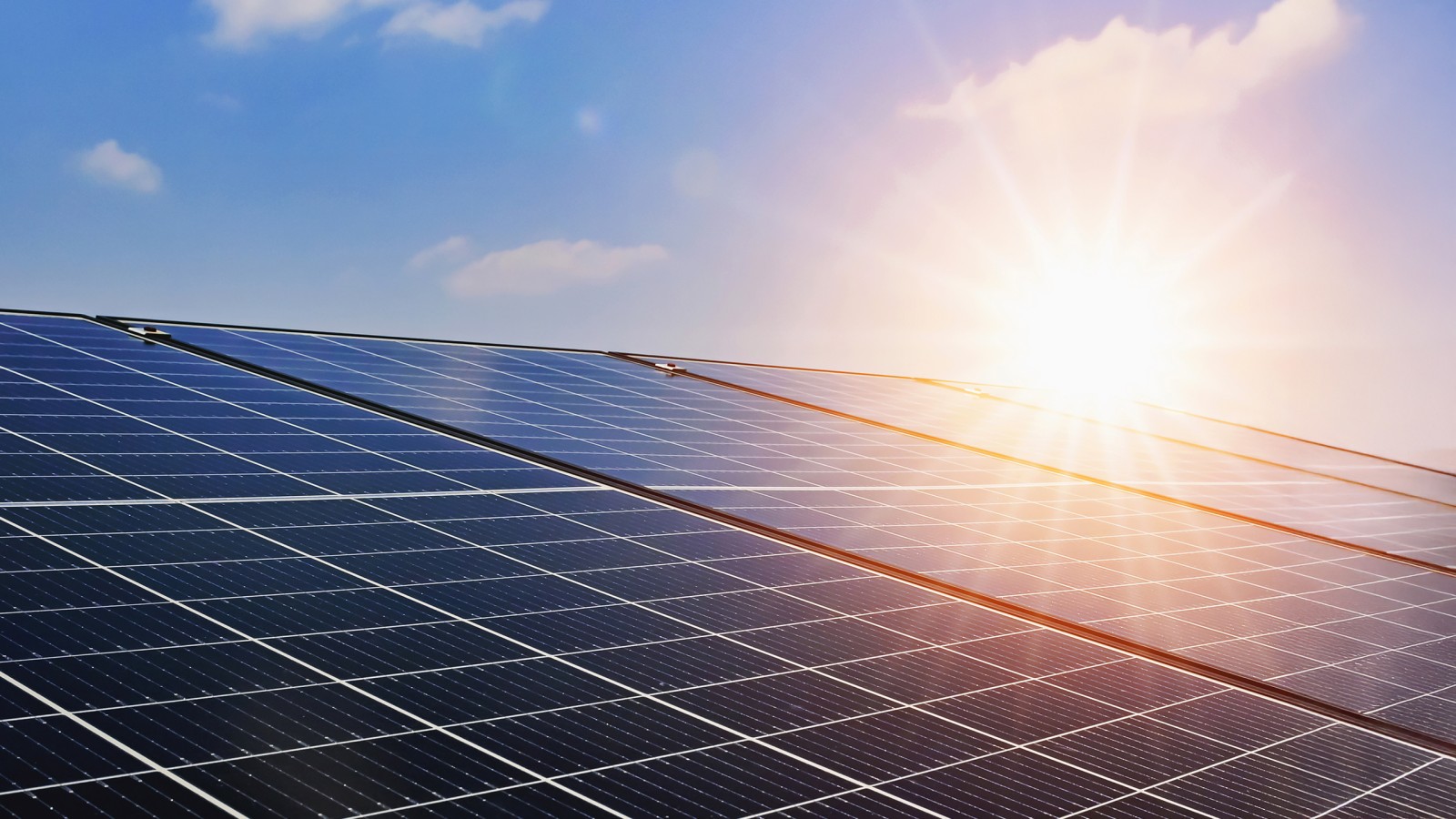
Electricity from the sun
Large-scale photovoltaic systems on open land transform previously unused areas into valuable sources of energy. Agricultural land can be put to dual use – for growing food and, at the same time, for generating energy. It is up to us to make the best possible use of the land available. Get in touch with us!
We develop and implement solutions for you that combine economic efficiency with environmental responsibility.
Large-scale solutions
Ground-mounted photovoltaic systems convert sunlight into electricity. We always consider photovoltaic systems in conjunction with energy storage solutions, so that the energy generated can be fed into the electricity grid as efficiently as possible.
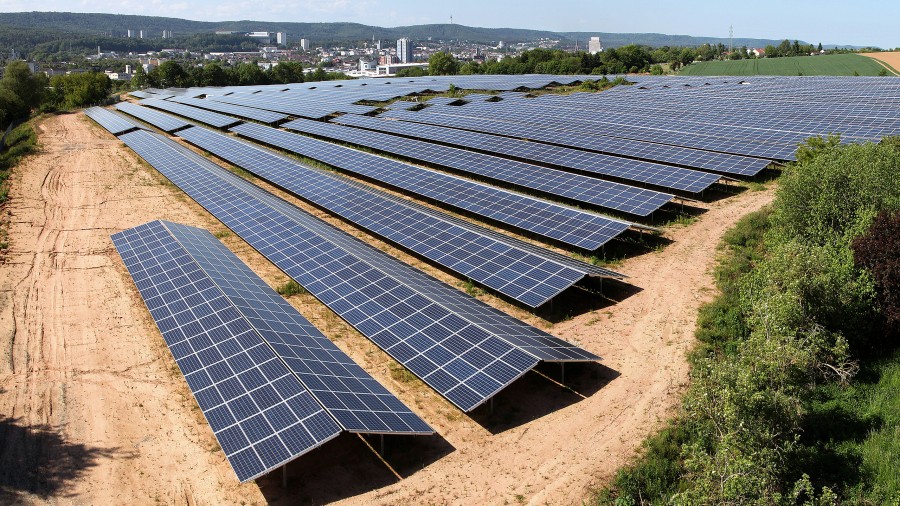
Which sites are suitable?
Sites in less-favoured agricultural areas, along motorways and railway lines, and on land converted from other uses are particularly suitable for the construction of FFPV installations. Heavily shaded areas and north-facing slopes yield lower returns and should therefore be avoided. FFPV is generally not permitted in nature conservation areas, such as national parks and nature reserves.
So-called agri-PV systems allow agricultural land to be used for two purposes – for growing food and, at the same time, for generating energy. This creates an innovative synergy between securing crop yields, conserving resources and generating energy.
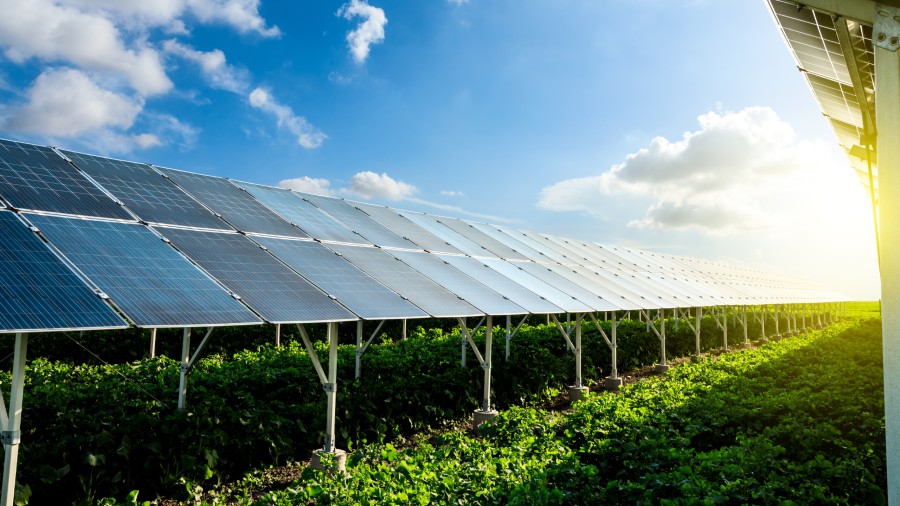
Which areas are suitable?
Virtually all land used for agricultural purposes is suitable for agri-PV, including arable land, land with permanent crops and grassland. However, peatlands and peat soils of high conservation value within statutory protected areas are excluded from such use. Land with a steep gradient is also generally unsuitable for agri-PV.
Do you have suitable premises?
Project Process and Services
Before photovoltaic systems can be installed, several steps are required, ranging from site selection and planning permission procedures to grid connection. We are always on hand to support you through every stage of the project:
Site assessment and land acquisition
Our team assesses and identifies suitable sites for agricultural and open-space installations. In doing so, we take into account key data from geographical, planning, technical and commercial perspectives.
Once suitable sites have been selected, we contact the landowners and the local authority to conclude land-use agreements.
Planning and approval
We liaise with the relevant authorities and handle all expert reports and surveys. We manage the entire process of regional planning and urban land-use planning right through to approval.
Financing
We work with leading financial institutions to draw up a financing plan.
Installation and commissioning
Our team plans, coordinates and supervises the construction work right through to commissioning. In parallel with commissioning, we organise the connection to the public electricity grid.
Business Management
Following commissioning, we offer services in the field of commercial and technical operations management. We are on hand to advise you throughout the entire service life of the plant.
Contact