Groundwater Management Area
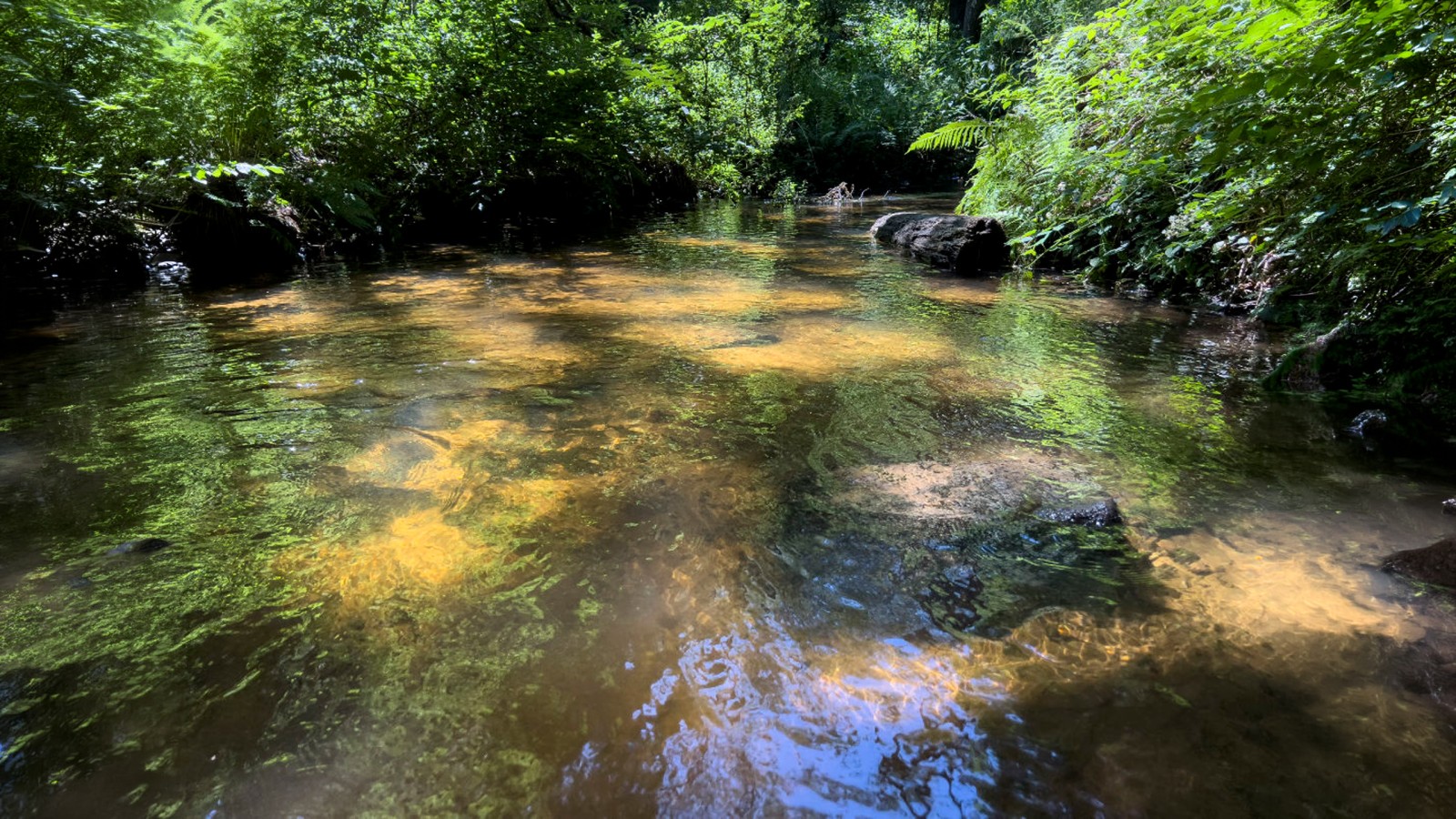
The Kaiserslautern Groundwater Management Area is situated on the northern edge of the Palatinate Forest, the largest contiguous forest area in Germany. It is hardly surprising that one of the largest groundwater reserves in Rhineland-Palatinate is also located beneath it. The Palatinate Forest not only provides its inhabitants with fresh drinking water, but also, via interconnecting pipelines, supplies the population in regional areas experiencing groundwater shortages – a factor that has become increasingly important in light of the now noticeable climate change.
Drinking water for the region
The impact of the drought between 2003 and 2006 on the groundwater balance and on increased consumption had already prompted Stadtwerke Kaiserslautern (SWK) and the “Westpfalz” Water Authority (ZWW), together with the relevant specialist and regulatory authorities, the City of Kaiserslautern and specialist consultancies, to set up a working group. The aim was to develop a long-term strategy that would secure and sustainably manage the drinking water supply through the future-proof, environmentally sound and economically viable management of groundwater resources.
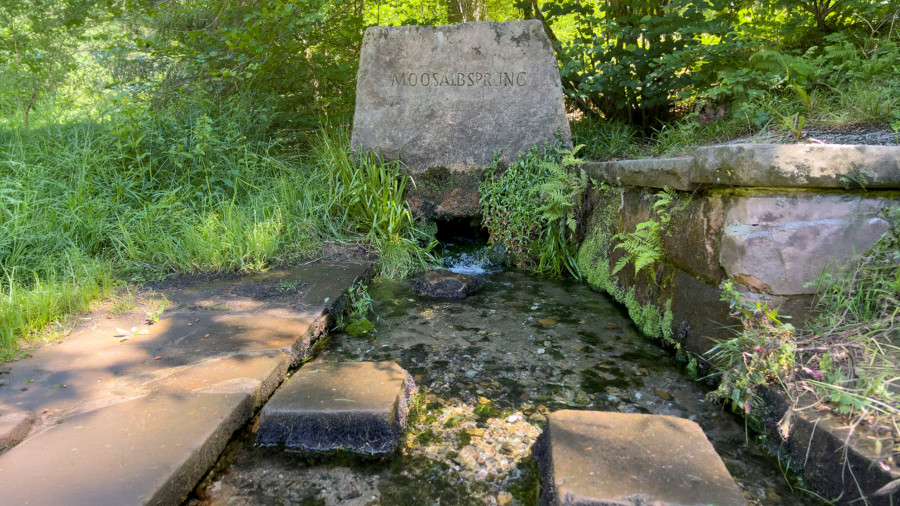
The “Groundwater Management Plan for Area KL 2030” was published in 2010 and has since served as a guide to groundwater management for stakeholders.
In view of the noticeable and measurable effects of climate change and population growth, it was necessary to review and adapt the existing management plan. The present “Integrated Groundwater Management Concept 2040 for the Kaiserslautern Area” (iGwB 2040) is intended to serve as a handbook and guide for a sustainable, efficient and resilient water supply over the next 20 years.
Basics
During the development of the GwB 2030, geological and hydrological conditions were analysed and, based on this, a hydrogeological model was created. To this day, new data is regularly collected as part of hydrological and ecological monitoring, and targeted investigations and adjustments are carried out as required.
Together with the data on climatic developments collected nationwide, this provides a comprehensive and detailed basis for the development of the iGwB 2040. This has enabled the water balances for the individual water abstraction areas to be updated, the groundwater resources to be reassessed, and projections to be made for the future. At the same time, future water demand has been forecast on the basis of expected population trends and future climatic conditions.
Results
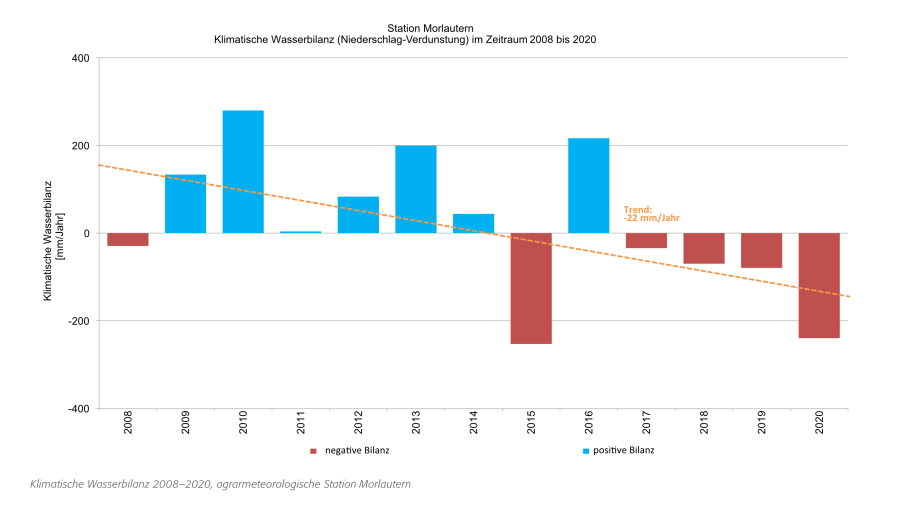
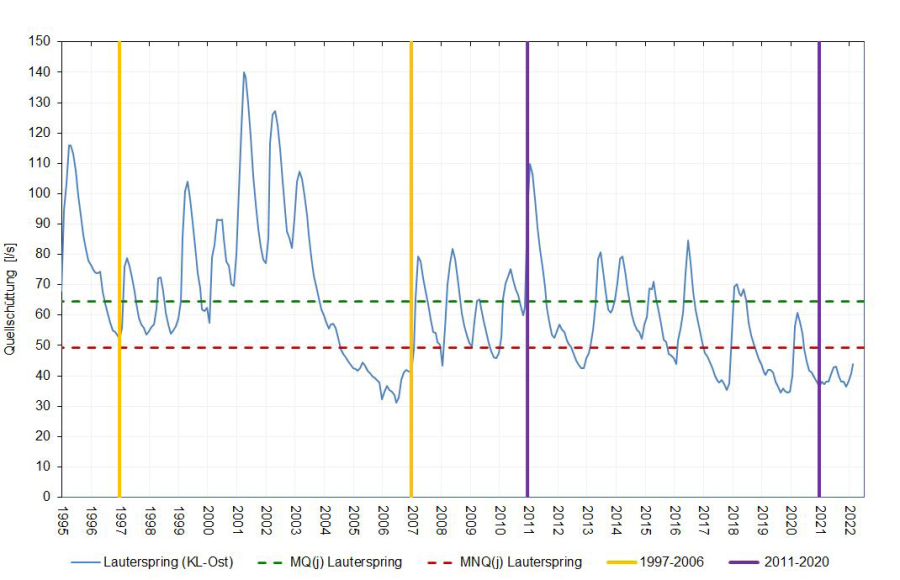
The climate changes are clearly evident. Annual precipitation has shown a slight downward trend over the last ten years, whilst the average annual temperature, by contrast, has shown a marked upward trend. This is also leading to falling groundwater levels, a decline in the flow rate of the Lauterspring spring and reduced discharge from surface water bodies.
The projections for future water demand in 2040 indicate a volume roughly equivalent to the demand during the dry year of 2020. For this baseline scenario, supply is guaranteed with limited management potential. Any future growth in the region leading to increased demand cannot currently be met.
The supply of drinking water to the public is therefore also assured for the future. However, given the possibility of adverse climate changes or rising demand, action is required.
Outlook for 2040 – Recommendations
Climate change is clearly evident. Annual precipitation has shown a slight downward trend over the last ten years, whilst the average annual temperature, by contrast, has shown a marked upward trend. This is also leading to falling groundwater levels, a decline in the flow rate of the Lauterspring spring and reduced discharge from surface water bodies.
Projections for future water demand in 2040 indicate a volume roughly equivalent to that required during the dry year of 2020. For this baseline scenario, supply is guaranteed with limited management potential. Any future growth in the region leading to increased demand cannot currently be met.
The supply of drinking water to residents is therefore also assured for the future. However, given the possibility of adverse climate changes or rising demand, there is a need for action.
Inspection and, where necessary, recommissioning of decommissioned extraction plants
Optimisation of technical equipment for wells, waterworks and elevated tanks
Assessing opportunities for expanding the integrated water system
Assessment of potential new well sites
Development of strategies for adapting to climate change
Stepped-up public relations work to foster a new ‘awareness of water’
Would you like more details?
We’d be happy to provide you with the full version of the “Integrated Groundwater Management Concept 2040”. Simply contact us at igwb2040@swk-kl.de
Contact

Team SWK Kundenservice
Mon & Tue: 8 am – 5 pm
Wed: 8 am – 1 pm
Thu & Fri: 8 am – 5 pm